6 Days Murchison Falls, Kibale and Queen Elizabeth Safari
6 Days / 5 Nights
Enjoy 6 Days Uganda Wildlife Safari exploring Murchison Falls, Kibale Forest and Queen Elizabeth National Park, with rhino…

This is the itinerary for people who keep a list. In fourteen days it moves through nearly every major birding habitat in Uganda:
the papyrus swamps of Mabamba, the lowland rainforest of Budongo, the Nile delta, the primate-rich forest of Kibale and Bigodi, the Congo-basin forest of Semuliki, the savannah and channels of Queen Elizabeth, the high montane forest of Bwindi’s Ruhija sector, and the acacia woodland of Lake Mburo.
Every stop has been chosen for specific birds. Semuliki holds Central African species found nowhere else in East Africa. Ruhija and the Mubwindi Swamp are among the best places in the world for Albertine Rift endemics.
Lake Mburo adds dry-country species that you will not see in the forests. With two weeks, you can give each habitat the time it deserves, with local specialist guides at the key sites.
MORNING Your guide meets you at arrivals and uses the drive to the hotel to learn about your experience and your wish list. Some guests want a single target, others want a long list, and the guide shapes the pace and the choice of sites accordingly.
Keep your binoculars handy, because the roadside already holds marabou storks and pied crows. If you have a preferred field guide or list app, bring it. Many guides carry a spotting scope for the trickier species, and a shared checklist helps everyone to keep track.
AFTERNOON The Botanical Gardens cover a lakeshore forest with old trees, open lawns and a patch of wetland. Walk slowly with your guide, and listen for great blue turacos and casqued hornbills.
Weavers build hanging nests along the shore and sunbirds visit flowering shrubs. In the late afternoon, flocks fly in to roost. The gardens are also known for grey parrots and the fish eagle that sometimes perches near the shore. Early morning and late afternoon are the best times.
EVENING The briefing covers the early starts, the kit to bring and the plan for each site. Pack a small day bag with water, a rain jacket, insect repellent and a notebook. Tomorrow starts around 5 am, so aim to sleep early. A packed breakfast is available for the drive.
Overnight: Protea Hotel Entebbe or similar
Meal plan: Dinner
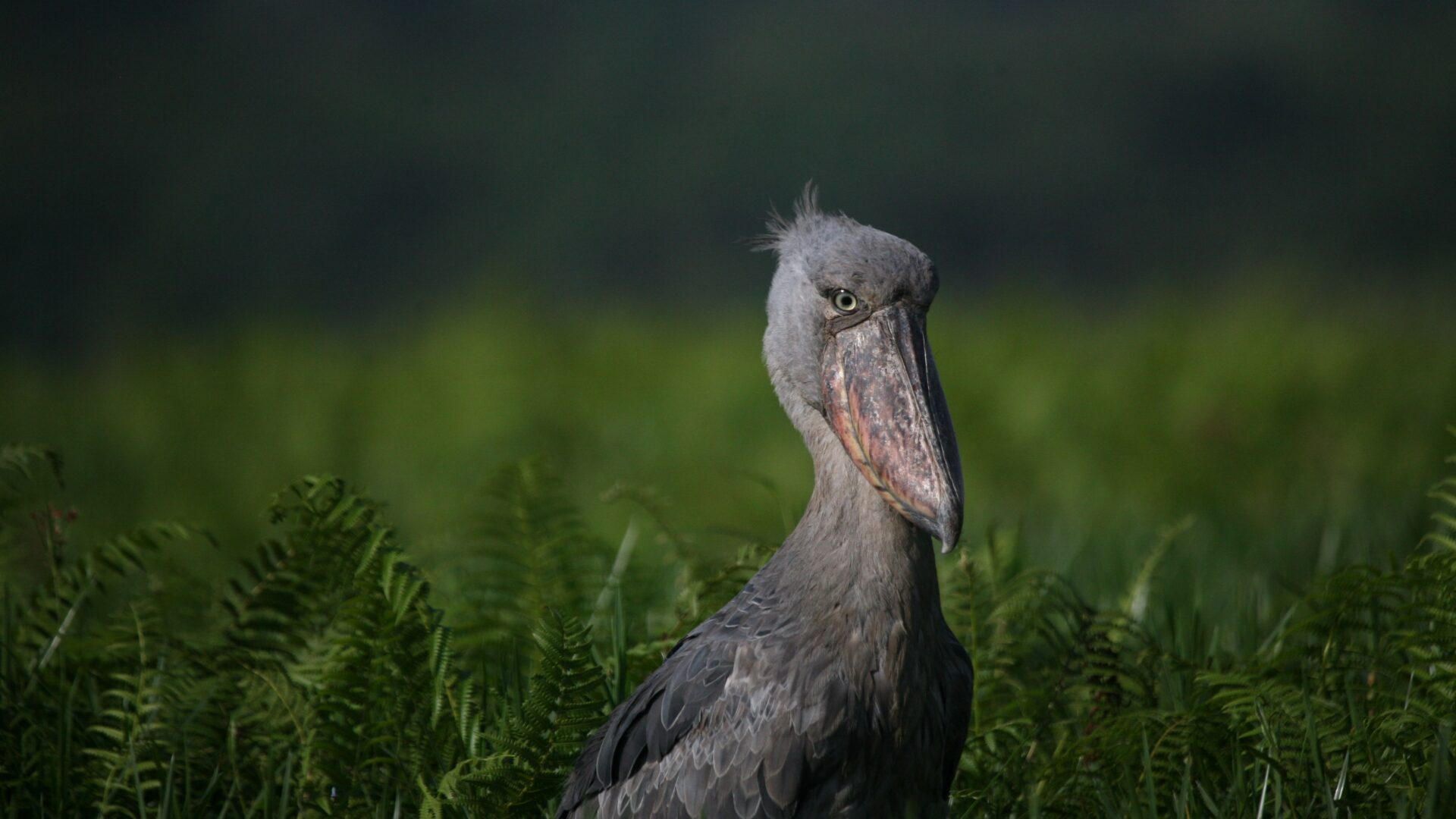
MORNING Mabamba Bay Wetland is a Ramsar-listed site, and the canoe trip takes two to three hours. A local boatman paddles through channels of papyrus and water lilies, and a community guide watches for the shoebill.
When you find it, the boatman holds the canoe still. The bird stands motionless, waiting for lungfish, and its huge bill makes it one of Africa’s most memorable birds. Papyrus gonolek, lesser jacana and African pygmy goose are also common.
Wear waterproof shoes, long trousers and a hat, and bring sunscreen and a rain jacket. Canoes are stable, and life jackets are provided. Bring a camera with a long lens.
AFTERNOON The drive north to Masindi takes about five hours, with a lunch stop. Your guide may suggest stops at roadside wetlands for waterbirds. As you approach Budongo, the landscape changes to forest. Roadside wetlands on the way north are good for herons, egrets and storks. Your guide can stop briefly for a scan.
EVENING The evening walk along the lodge trails is a chance to see forest birds in the last light. Dinner follows, and an early night is welcome. The lodge is simple and quiet, and the staff can arrange an early breakfast.
Overnight: Budongo Eco Lodge or similar
Meal plan: Breakfast, Lunch, Dinner
MORNING The Royal Mile is a wide, straight track through mahogany forest, one of the best birding trails in Uganda. You walk slowly with a local bird guide, who listens for calls and imitates them.
Chocolate-backed kingfisher, Puvel’s illadopsis and white-thighed hornbill are targets, and the guide may also find Nahan’s francolin. Chimpanzees live here, and you may hear their calls.
Wear neutral colours and long trousers, since insects and ants are common. A small torch is useful in the early light. Walk slowly and quietly.
AFTERNOON The drive to Murchison takes about two to three hours. The road passes forest edge and then savannah. At the southern gate, formalities are quick, and the first savannah species appear: rollers, bee-eaters, shrikes and raptors.
Your guide uses calls to attract birds, but sparingly, to avoid stress to the birds. Patience is the key to good sightings.
EVENING At the lodge, you have time to rest before dinner. Murchison’s night sounds, hippos and nightjars, drift up from the river. Take time to update your list and charge your batteries.
Overnight: Murchison River Lodge, Chobe Safari Lodge or Pakuba Safari Lodge
Meal plan: Breakfast, Lunch, Dinner
MORNING The delta cruise starts early because birds are most active at dawn. The captain moves slowly through the papyrus channels, and when a shoebill is spotted, the engine is cut.
Other targets include Goliath heron, long-toed lapwing, malachite kingfisher and the red-throated bee-eater, which nests in colonies in the riverbank. Bring a hat, sunscreen and a light jacket for the boat. A long lens is useful for the shoebill, which is often at some distance.
AFTERNOON The afternoon game drive adds savannah species. Abyssinian ground hornbills walk in family groups, secretary birds hunt snakes and bustards stand tall in the grass.
Raptors such as bateleur and martial eagle soar overhead. The afternoon game drive has a more relaxed pace. Your guide stops often for birds, and a flask of tea helps to keep the energy up.
EVENING Dinner is followed by a recap of the day’s list, and your guide helps with identifications. Over dinner, check your list and plan tomorrow’s target species.
Overnight: Murchison River Lodge, Chobe Safari Lodge or Pakuba Safari Lodge
Meal plan: Breakfast, Lunch, Dinner
MORNING An early walk near the lodge is a chance to find any species still missing. Savannah birds are active in the cool air. After breakfast, the drive south-west begins. The day is long, but the drive offers several good stops. Take snacks, water and a camera, and keep binoculars handy.
AFTERNOON The road to Kibale takes six to seven hours with stops. Your guide stops at wetlands and forest patches for birds, and at roadside stalls for fruit. The scenery changes from savannah to hills and tea estates. Your guide may stop at a wetland or forest patch for specific species.
Ask if there is a bird you particularly want to see.
EVENING At the lodge, a short walk in the late afternoon often turns up sunbirds, bee-eaters and turacos. Dinner is early. Pack your gear for tomorrow’s forest walk.
Overnight: Kibale Forest Camp or Primates Lodge Kibale
Meal plan: Breakfast, Lunch, Dinner
MORNING Kibale Forest is home to hundreds of bird species and 13 primate species. With a local bird guide, you walk slowly along forest trails, listening for calls. Great blue turacos, black bee-eaters and several hornbills are common, and the guide may find the African pitta in the right season.
Forest birding is slow, so bring patience and a neck strap for binoculars. Local guides know the calls, and the best sightings often come after standing still.
AFTERNOON The Bigodi Wetland Sanctuary is a community-run reserve with a boardwalk through papyrus and forest edge. More than 200 bird species have been recorded, and the walk is gentle. Papyrus gonolek, great blue turaco and several monkeys are common.
The fees support schools and clinics. The Bigodi boardwalk is flat and easy. Bring a hat and insect repellent.
EVENING Dinner at the lodge, followed by a checklist session. A drink on the terrace is a good way to end the day.
Overnight: Kibale Forest Camp or Primates Lodge Kibale
Meal plan: Breakfast, Lunch, Dinner
MORNING The drive west from Fort Portal to Semuliki crosses the Rwenzori foothills and descends to the Congo-basin lowlands. The change is dramatic: the air gets warmer and more humid, and the forest becomes taller and darker.
Semuliki is an extension of the Ituri Forest, and it holds birds found nowhere else in East Africa. Semuliki is hot and humid, so bring light, quick-drying clothes, long trousers, insect repellent and a rain jacket. Water is important, and your guide carries extra.
AFTERNOON The Kirumia trail and the Sempaya area are the main birding sites. Your local guide leads you slowly, listening for calls. Targets include the Nkulengu rail, the red-billed dwarf hornbill and other Central African forest species.
The hot springs at Sempaya are a pleasant stop, and the guide explains the local legends. Birding in lowland forest is hard, because many species stay in the canopy or undergrowth. Local guides know the calls and the territories, and patience brings rewards.
EVENING Dinner at the lodge, with the night sounds of the lowland forest. Mosquito protection is important here, so bring repellent. Dinner is relaxed. Take time to update your list and rest.
Overnight: Semliki Safari Lodge or similar
Meal plan: Breakfast, Lunch, Dinner
MORNING A final early morning in Semuliki is a chance to look for any missing species. The forest is most active in the first hours, and the guide uses calls to find birds. Breakfast follows, and then the drive begins. The forest is loudest at dawn, so a last early walk is worthwhile. Bring a torch and insect repellent.
AFTERNOON The drive to Queen Elizabeth takes about three to four hours via Fort Portal and Kasese. If the sky is clear, you see the Rwenzori Mountains. Your guide stops for birds and for lunch. The drive is long but scenic. Your guide may stop at viewpoints and for birds along the road.
EVENING At the lodge, a short walk or late drive gives you a first look at the park’s birds. Dinner is at the lodge. Stretch your legs and enjoy a drink at the lodge.
Overnight: Enganzi Game Lodge, Mweya Safari Lodge or Pumba Safari Cottages
Meal plan: Breakfast, Lunch, Dinner
MORNING The Kasenyi plains are open savannah, and birds include bustards, larks, pipits and raptors such as martial eagle, bateleur and tawny eagle. Kob, buffalo and elephants share the plains, and lions and hyenas are sometimes seen.
The early light is soft and ideal for photographs. Bring a hat, sunscreen and a light jacket for the dawn drive. A long lens is useful for raptors.
AFTERNOON The Kazinga Channel runs for about 32 kilometres, linking Lake George and Lake Edward. The cruise lasts about two hours, and pink-backed and great white pelicans, African skimmers, pied kingfishers, spoonbills, storks and waders line the banks.
The boat can approach closely. On the boat, binoculars and a long lens make a big difference for birds. The guide can help you identify species.
EVENING Dinner at the lodge, and a drink as you review the day’s list. Take time to update your list.
Overnight: Enganzi Game Lodge, Mweya Safari Lodge or Pumba Safari Cottages
Meal plan: Breakfast, Lunch, Dinner
MORNING The Ishasha sector is quieter and more remote than the north. Stop for birds along the way, and search the fig trees for the park’s famous tree-climbing lions. Your guide drives slowly between the trees.
The drive to Ishasha is a chance to ask your guide about birds of the savannah. Stops for roadside birds are welcome.
AFTERNOON The afternoon drive to Ruhija takes three to four hours. The road climbs through tea and farmland into montane forest, and the first Albertine Rift species begin to appear along the roadside.
The air is cool, and mist often gathers in the valleys. The road to Ruhija is winding and the air cools. Take a warm layer, since Ruhija is cold in the evening.
EVENING Dinner and an early night, since tomorrow is the main day. Ruhija sits at about 2,300 metres, so bring a warm layer. The lodge is simple and quiet. Pack your gear for tomorrow’s long walk.
Overnight: Trackers Safari Lodge (Ruhija) or Gorilla Mist Camp
Meal plan: Breakfast, Lunch, Dinner
MORNING Mubwindi Swamp is the key site. The trail descends through montane forest to a high-altitude swamp, and the round trip takes four to six hours on steep, uneven ground that can be muddy. A ranger and a local bird guide lead you.
Targets include African green broadbill, Grauer’s broadbill, Shelley’s crimsonwing, handsome francolin and regal sunbird. Wear waterproof boots, long trousers and a rain jacket, and bring a packed lunch and water. The trail is steep and can be slippery, so a walking stick helps. Keep a light pace.
AFTERNOON After a picnic lunch at the swamp, you walk back with time to look for forest robins, warblers and sunbirds. Patience is important, because some of the birds stay hidden and call from the undergrowth. The swamp trail needs quiet and patience.
Guides may wait for long periods for a bird to show. Bring a camera with a long lens and a spare battery.
EVENING A rewarding day, followed by dinner and a long list to write up. Dinner is relaxed, and a hot drink is welcome. Take time to update your list.
Overnight: Trackers Safari Lodge (Ruhija) or Gorilla Mist Camp
Meal plan: Breakfast, Lunch, Dinner
MORNING A short walk near the lodge at dawn is a last chance for missing montane birds. After breakfast, the drive begins. Early walks at Ruhija are cold, so wear layers. Take a flask of coffee or tea.
AFTERNOON The road to Lake Mburo takes six to seven hours via Kabale, Ntungamo and Mbarara. Stops are made for roadside birding and lunch. The landscape changes from steep hills to rolling cattle country, and you see herds of long-horned Ankole cattle.
The long drive is easier with snacks, water and a good playlist. Your guide stops for birds and lunch.
EVENING At Lake Mburo, a short drive for dry-country birds fills the late afternoon. Dinner is at the lodge. At Lake Mburo, the lodge may offer a short drive for nocturnal birds.
Overnight: Rwakobo Rock or Mihingo Lodge
Meal plan: Breakfast, Lunch, Dinner
MORNING Walking is allowed at Lake Mburo, which makes it one of the best savannah birding experiences in Uganda. A ranger leads you through acacia woodland at dawn.
Targets include red-faced barbet, brown parrot, bare-faced go-away-bird and black-bellied bustard. More than 300 bird species have been recorded in the park. Wear sturdy shoes, a hat and sunscreen. Walking at Lake Mburo is allowed, so you can approach birds quietly. The ranger sets the pace.
AFTERNOON The boat trip takes about two hours and brings you close to hippos, crocodiles and waterbirds. The shy African finfoot is a key target, and the boatman knows where to look.
Papyrus gonolek and several kingfishers are also common. On the boat, binoculars are essential. The African finfoot is shy, and patience is needed.
EVENING Sundowners and a last dinner of the trip, with time to complete the checklist. Take time to complete your checklist and to share the highlights of the trip.
Overnight: Rwakobo Rock or Mihingo Lodge
Meal plan: Breakfast, Lunch, Dinner
MORNING A short walk or drive near the lodge for any last birds. The morning is quiet, and the light is soft. The last walk is short, and the light is soft. Bring a camera for photographs of the landscape.
AFTERNOON The drive to Kampala takes about four to five hours, with a stop at the Equator at Kayabwe and lunch in Masaka. Your guide may suggest roadside stops for last-minute species. The drive to Kampala has several good rest stops. The Equator stop has toilets, craft shops and a small café.
EVENING We aim to arrive by late afternoon, leaving a comfortable buffer for evening flights. Your guide helps you to compile your final species list. We can arrange an airport transfer at any time, and your guide will help with luggage and checking in.
End of services. Departure day, no overnight.
Meal plan: Breakfast, Lunch
6 Days / 5 Nights
Enjoy 6 Days Uganda Wildlife Safari exploring Murchison Falls, Kibale Forest and Queen Elizabeth National Park, with rhino…
6 Days / 5 Nights
Experience a 6-day Uganda adventure safari with Nile white-water rafting, a Source of the Nile cruise, Sipi Falls…
10 Days / 9 Nights
Book your 10-Day Uganda Gorilla & Chimpanzee Safari. Track mountain gorillas in Bwindi, see chimps in Kibale and…
From USD 3,790
View safari: 10 Days Uganda Grand Safari