
Mountain Gorillas
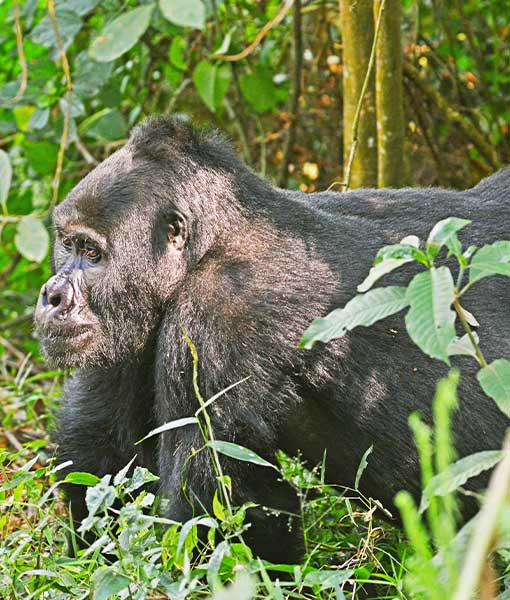
Mountain Gorillas
Mountain Gorillas: Facts, Habitat, Behaviour
Mountain gorillas are among the most endangered great apes in the world and are considered one of the closest living relatives to humans. Sharing approximately 98 per cent of human DNA, these remarkable primates are powerful yet gentle, intelligent, and highly social. Found only in the high-altitude forests of East and Central Africa, mountain gorillas are a major highlight of African wildlife safaris and gorilla trekking experiences.
Reproduction and Life Cycle of Mountain Gorillas
Mountain gorillas reproduce throughout the year. The gestation period lasts about 8.5 months, and females usually give birth to one infant, although twins can occur in rare cases. At birth, a baby gorilla weighs around 3 to 4 pounds and is completely dependent on its mother. Infants begin crawling at about two months of age and start walking between eight and nine months. They nurse for up to three years to gain strength and survival skills necessary for life in the wild. In their natural habitat, mountain gorillas can live up to 35 years, while in captivity they may reach 50 to 53 years.
Size and Physical Characteristics
Mountain gorillas are the largest living primates on Earth. Adult males, known as silverbacks, can stand between 5 feet 5 inches and 6 feet tall and weigh between 300 and 450 pounds. Females are smaller, measuring about 4.5 to 5 feet tall and weighing up to 200 pounds. Their massive build, broad chests, and strong arms make them incredibly powerful, yet they are known for their calm and peaceful nature when undisturbed.
Habitat and Where to Find Mountain Gorillas
Mountain gorillas live in dense tropical rainforests, bamboo forests, and montane forests at elevations ranging from 2,500 to 4,000 meters. They are found in only two regions in the world: the volcanic highlands of the Virunga Mountains, which stretch across Uganda, Rwanda, and Democratic Republic of the Congo, and in Bwindi Impenetrable Forest National Park in southwestern Uganda. These protected areas are globally recognized for gorilla trekking safaris and mountain gorilla conservation programs.
Diet and Feeding Habits
Mountain gorilla are strictly herbivorous. Their diet consists mainly of leaves, stems, shoots, thistles, bedstraws, flowers, small tree branches, and seasonal fruits. Because their plant-based diet contains high moisture content, mountain gorillas rarely need to drink water directly. They spend much of their day feeding and resting while moving within their home ranges, which can cover 10 to 20 square miles.
Behaviour and Social Life
Mountain gorilla live in close-knit family groups led by a dominant male called the silverback. A typical group includes one silverback, several adult females, and their offspring. Younger males, known as blackbacks, remain submissive to the dominant male. The silverback makes important decisions about where the group feeds, moves, and sleeps. He also protects the family from threats.
Although they are large and powerful, mountain gorilla are gentle and shy animals. They avoid conflict unless provoked. When threatened, the silverback may charge, beat his chest, vocalise loudly, tear vegetation, and position himself between the danger and his family. These dramatic displays are usually enough to prevent physical confrontation.
Mountain gorilla are active during the day. At dusk, each member constructs a new nest using leaves and branches. Interestingly, they do not reuse old nests, even if they are still nearby. Infants share nests with their mothers for warmth and protection.
Predators, Threats and Conservation
Historically, humans have been the greatest threat to mountain gorillas through poaching, habitat destruction, and disease transmission. Leopards are natural predators, but human activity has had the most significant impact. Because mountain gorillas share 98 per cent of human DNA, they are highly susceptible to human diseases, especially respiratory infections such as pneumonia. This is why strict rules during gorilla trekking safaris require visitors to maintain a safe distance.
Today, mountain gorilla conservation efforts and sustainable ecotourism have played a vital role in increasing their population. Protected national parks, anti-poaching patrols, and responsible tourism practices continue to safeguard their future.
Why Mountain Gorillas Are Important
Mountain gorillas are the largest of all living primates and are considered one of Africa’s most iconic wildlife species. Their intelligence, emotional bonds, and strong family structures make them fascinating to researchers and travellers alike. Protecting mountain gorillas not only preserves biodiversity but also supports local communities through ecotourism and conservation programmes. Mountain gorillas remain one of the most extraordinary wildlife experiences in Africa, and their survival is a testament to the power of conservation and responsible tourism.

All Categories
Recent Posts
Tour Uganda Gorilla
Mountain Gorillas
Best Luxury African Safari Tours
Africa
Quick booking process
(+256)755446166
